
Fluid, piping & valves
Instrument hook-up assemblies
Instrument hook-up assemblies that connect a process tapping to a pressure gauge or transmitter, combining root valves, tubing, fittings, manifolds and, where needed, condensate pots into a single engineered line.
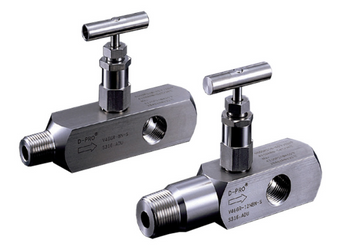
Overview
A hook-up is everything between the process connection and the instrument. A typical pressure or differential pressure hook-up includes a gauge root valve at the tapping, impulse tubing and compression fittings, a valve manifold at the transmitter, and vent or drain points. Steam and condensable vapour services add condensate pots to keep a stable liquid column in the impulse lines; instrument air distribution uses air headers.
The source sites list the main components used in hook-ups, including gauge root valves, manifolds, tube fittings, condensate pots and air headers, as well as hydraulic pressure test pumps and pressure gauges for hydrostatic testing. They do not describe pre-assembled hook-ups in detail.
Planning a hook-up
Work from the hook-up drawing for each instrument type: tapping size and rating, tube size and material, valve and manifold configuration, and the slope and routing of impulse lines. Send the drawing and process conditions so components can be selected consistently.
Range overview
- Types and variants
- Pressure Gauge Hook-Ups
- Differential Pressure Transmitter Hook-Ups
- Steam Service Hook-Ups With Condensate Pots
- Instrument Air Distribution
- Materials and grades
- Stainless Steel
- Carbon Steel
- Mild Steel
- Connections and interfaces
- NPT
- BSP
- BSPT
- Compression Tube Ends
- Features
- Components Selected From One Range
- Root Valves, Tubing, Fittings and Manifolds
Exact specifications depend on the variant, material and size. Confirm ratings and certification against the datasheet or with our engineers before ordering.
Applications
- Pressure and Differential Pressure Measurement
- Steam Flow Measurement
- Impulse Line Connections
- Hydrostatic Testing of Lines
Industries
- Oil and gas
- Chemical
- Petrochemical
- Power generation
- Refining
Information that speeds up a quotation
Share what you know. Anything you are unsure of can be marked “not known” — our engineers will help confirm it.
- Valve type
- Port
- Flow direction
- Pressure
- Temperature
- Cv
- Material
- End connection
- Actuation
- Standard
Need a datasheet?
Add this family to your enquiry list and mention the variant — we will send the relevant technical documents.
Valves and manifolds
Related and alternative families
Industrial ball valves
Quarter-turn ball valves for shut-off duty on oil, gas, water, air and fuel lines, from compact instrument valves to high-pressure models, in…
Needle valves
Instrument needle valves for fine flow regulation and isolation on gauge, transmitter, sampling and process lines, machined from bar stock or forgings…
Check valves
Check (non-return) valves that let flow pass in one direction and close automatically against reverse flow, from instrument-size poppet and piston check…
Block valves
Block valves for isolating process connections to instruments and sample points, including single and double block-and-bleed valves, monoflange valves and block-and-bleed gauge…
Bleed valves
Instrument bleed valves for venting trapped signal-line pressure to atmosphere before an instrument is removed or during calibration, used on multi-valve manifolds,…
Double block-and-bleed assemblies
Double block-and-bleed assemblies and multi-valve manifolds that give two-barrier isolation with a vent between, for safe maintenance and calibration of pressure gauges,…
Related solutions and guides
Frequently asked questions
What do you need to supply components for an instrument hook-up?
Send the hook-up drawings or a bill of materials for each instrument type, with process pressure, temperature and media, tapping size and connection, tube OD and wall thickness, and material. Quantities per hook-up and the number of hook-ups complete the enquiry.
When are condensate pots part of a hook-up?
Condensate pots are used on steam and condensable vapour services, typically for flow measurement across an orifice. They keep a stable column of condensate in each impulse line so that both sides of the transmitter see equal liquid heads and the instrument is protected from live steam.
Ready to specify instrument hook-up assemblies?
Send the details you have — quantities, sizes, drawings or a part number. Unknowns are fine.