
Cooling, humidity & air
Industrial humidification systems
Industrial humidification systems add moisture to air using high-pressure fogging nozzles, or compressed-air dry fog, to hold humidity at the level a process, product or growing environment needs, with zoned sensor control.
Overview
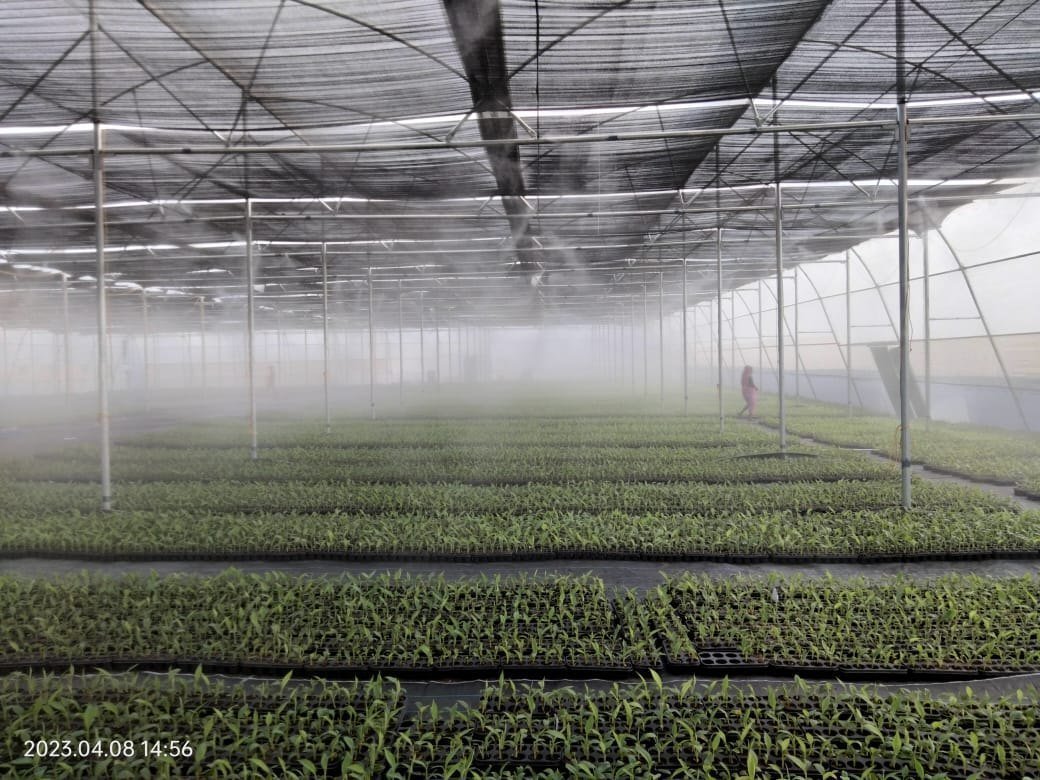
A high-pressure fogging system pumps treated water through stainless steel or ceramic anti-clog nozzles to make fog fine enough to evaporate in the air. Overhead nozzle lines are laid out in zones, each controlled by humidity sensors so that fogging starts and stops to hold the set point. A built-in pressure relief valve protects the pump and lines. Dry fog systems, which use compressed air with air-atomising nozzles, are an alternative where air is available.
Industrial humidification is used in textile ginning, pressing, spinning and weaving, printing, woodworking, storage of fruit, vegetables and paper, greenhouses, mushroom farms, poultry and dairy sheds, and tea processing. It can also help with static, lint and dust.
Selecting a humidification system
Consider the space volume, target humidity range, existing ventilation, process heat loads, water quality and the need for treatment, pipe run lengths, whether compressed air is available, and how zones should be controlled. High-pressure fogging generally suits large areas and long pipe runs.
Range overview
- Types and variants
- High-Pressure Fogging System
- Dry Fog (Air-Atomising) Humidification
- Textile Mill Humidification
- Greenhouse Fogging System
- Zoned Humidity Fogger System
- Materials and grades
- Stainless Steel Nozzles
- Ceramic Nozzles
- Brass Nozzles
- Pressure / temperature
- Fogging Pressure: 1,000–2,000 psi (About 69–138 bar)
- Typical Droplet Size: 20–30 µm
- Nozzle Flow: About 3–5 L/h per Nozzle
- Textile Mill Systems: Pump Pressure About 50–70 bar
- Textile Mill Systems: About 0.05–0.30 L/min per Nozzle
- Features
- Anti-Clog Nozzles
- Built-In Pressure Relief Valve
- Sensor-Based Humidity Control by Zone
- Filtration and Water Treatment
- Retrofit to Existing Buildings
Exact specifications depend on the variant, material and size. Confirm ratings and certification against the datasheet or with our engineers before ordering.
Applications
- Textile Ginning, Pressing and Spinning
- Printing Presses
- Woodworking
- Fruit, Vegetable and Paper Storage
- Greenhouses
- Mushroom Farms
- Poultry and Dairy Sheds
- Tea Processing
Industries
- Textiles
- Printing
- Woodworking
- Agriculture
- Warehousing
- Food processing
Information that speeds up a quotation
Share what you know. Anything you are unsure of can be marked “not known” — our engineers will help confirm it.
- Area
- Dimensions
- Indoor outdoor
- Temperature
- Relative humidity (RH)
- Target RH
- Water quality
- Ventilation
- Power
- Maintenance
Need a datasheet?
Add this family to your enquiry list and mention the variant — we will send the relevant technical documents.
Cooling and humidification
Related and alternative families
Industrial high-pressure mist cooling
Industrial high-pressure mist cooling uses pumps and fine nozzles to release water mist that evaporates into the air, providing evaporative cooling and…
Indoor mist cooling
Indoor mist cooling uses high-pressure pumps and fine anti-drip nozzles to release micron-sized droplets that evaporate quickly, cooling and humidifying indoor spaces…
Outdoor mist cooling
Outdoor mist cooling uses high-pressure misting lines or mist fans to create a cooler, more comfortable microclimate in patios, gardens, resorts, outdoor…
Adiabatic condenser and VRF pre-cooling
Adiabatic condenser and VRF pre-cooling places a line of misting nozzles in front of air-cooled condenser coils, chillers or VRF outdoor units,…
Textile spinning and weaving humidification
Textile spinning and weaving humidification uses high-pressure pumps and overhead mist nozzle lines to hold humidity in ginning, pressing, spinning and weaving…
Warehouse humidity control
Warehouse humidity control and mist cooling use high-pressure fogging to manage temperature, humidity, dust and odour in storage buildings, with zoned control…
Related solutions and guides
Frequently asked questions
What information do you need to design a humidification system?
Send the area dimensions and ceiling height, the target humidity range, existing ventilation and heat sources, the process or product being protected, water source and quality, available power and compressed air, and how many zones you need. A building layout with machine positions helps plan nozzle lines.
High-pressure fogging or dry fog: which suits my site?
High-pressure fogging uses only water and a pump, and generally suits large areas and long pipe runs. Dry fog uses compressed air with air-atomising nozzles and suits sites where compressed air is readily available. Water quality, energy source, area and maintenance preferences guide the choice.
Ready to specify industrial humidification systems?
Send the details you have — quantities, sizes, drawings or a part number. Unknowns are fine.