
Automation & robotics
Industrial switchgear
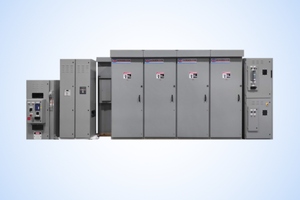
Low-voltage industrial switchgear, including disconnect switches, fuses and circuit breakers, used to isolate electrical equipment safely for maintenance and to clear faults before they damage downstream circuits.
Overview
Switchgear is the collective term for devices that switch, protect and isolate electrical circuits. Disconnect switches provide a visible point of isolation so equipment can be worked on safely. Fuses and circuit breakers detect overloads and short circuits and interrupt the supply to protect cables and equipment further down the line. In automation panels, switchgear sits alongside drives, contactors and control devices.
Selection and coordination of these devices is part of every control-panel and motor-circuit design.
Selecting switchgear
Key inputs are system voltage, rated current, prospective short-circuit level at the installation point, the type of load (motor, heater, distribution), required protection characteristics and coordination with upstream and downstream devices. Mounting style, number of poles, accessories such as auxiliary contacts and shunt trips, and the panel's environmental conditions also matter.
Range overview
- Types and variants
- Disconnect Switches
- Fuses
- Circuit Breakers
- Features
- Equipment Isolation
- Overload Protection
- Short-Circuit Protection
Exact specifications depend on the variant, material and size. Confirm ratings and certification against the datasheet or with our engineers before ordering.
Applications
- Equipment Isolation for Maintenance
- Fault Clearing
- Motor Circuit Protection
- Control Panel Distribution
Industries
- Manufacturing
- Water and wastewater
- HVAC
- Material handling
Information that speeds up a quotation
Share what you know. Anything you are unsure of can be marked “not known” — our engineers will help confirm it.
- Brand approval
- Power
- Voltage
- Phase
- I/O count
- Communication
- Environment
- Certification
Need a datasheet?
Add this family to your enquiry list and mention the variant — we will send the relevant technical documents.
Electrical and controls
Related and alternative families
AC drives and VFDs
AC drives and variable frequency drives (VFDs) that control the speed and torque of AC motors by varying supply frequency and voltage,…
AC motors and gear motors
AC induction motors and geared motors that combine a motor with an integrated gearbox to deliver reduced speed and higher torque, for…
Servo drives and servo motors
Servo drives and brushless servo motors for closed-loop control of position, speed and torque on machines, robots and positioning systems where accurate,…
Programmable logic controllers
Programmable logic controllers (PLCs) and related controllers that read inputs from sensors and switches, run user-written logic and drive outputs to motors,…
Human-machine interfaces
Human-machine interfaces (HMIs), from machine-mounted operator panels to monitors and tablets, that let operators view process data, track production, adjust settings and…
Industrial sensors and encoders
Industrial sensors and rotary encoders that turn physical conditions and motion into electrical signals for PLCs, drives and counters, covering proximity, photoelectric,…
Frequently asked questions
What information is needed to select switchgear?
Provide the supply voltage and system type, the load and its rated current, the fault level at the point of installation if known, the number of poles, and how the device will be mounted. For motor circuits, give the motor rating and starting method so protection can be coordinated.
Should I use fuses or circuit breakers?
Fuses are simple and fast-acting but must be replaced after operating. Circuit breakers can be reset and often offer adjustable settings and accessories such as auxiliary contacts. The choice depends on fault levels, coordination requirements, maintenance practice and panel space.
Ready to specify industrial switchgear?
Send the details you have — quantities, sizes, drawings or a part number. Unknowns are fine.