
Water treatment
Sewage treatment plants
Sewage treatment plants for residential townships, hotels, hospitals, campuses, IT parks and factories, treating domestic wastewater biologically so it can be discharged safely or reused for flushing, gardening and cooling.
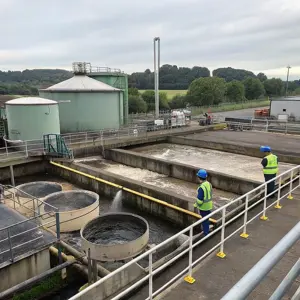
Overview
An STP takes raw sewage through screening and grit removal, equalisation, biological treatment, clarification or membrane separation, tertiary filtration and disinfection, with excess sludge thickened and dewatered. Technologies include extended aeration, SAFF, SBR, MBBR and MBR, with hybrid arrangements for larger flows. Plants can be civil-built or skid-mounted, with FRP or SS 304 internals. Automation can include a PLC and HMI with remote dashboards and alarms, and online monitoring of flow, pH, dissolved oxygen, ORP and MLSS. Odour-controlled enclosures, UV disinfection and nutrient removal stages can be added where needed.
Selecting a sewage treatment plant
Plant choice depends on daily flow and peak factor, the land available, the required outlet quality for discharge or reuse, and power and operating budgets. As a rough guide from source material, MBBR or extended aeration suit very small flows, SBR or MBR suit small to medium flows, and SBR, SAFF or hybrids suit larger plants. Each site should be assessed individually.
Range overview
- Types and variants
- Extended Aeration (EA)
- SAFF
- SBR
- MBBR
- MBR
- Hybrid Biological Process
- Civil-Built STP
- Skid-Mounted STP
- Materials and grades
- FRP Internals
- SS 304 Internals
- Size range
- 5 KLD to 10 MLD (Typical Range)
- Modular Plants up to 100 MLD
- 50 KLD Compact STP Footprint About 85–90 m²
- Features
- Screening and Grit Removal
- Tertiary Polishing
- Sludge Dewatering
- PLC/HMI With Remote Dashboard
- Online Flow, pH, DO, ORP and MLSS Monitoring
- VFD Pumps and Blowers
- Odour-Controlled Enclosures
- UV Disinfection
- Nutrient Removal Options
Exact specifications depend on the variant, material and size. Confirm ratings and certification against the datasheet or with our engineers before ordering.
Applications
- Toilet Flushing
- Gardening and Horticulture
- Cooling Tower Make-Up
- Construction Water
- Safe Discharge
Industries
- Residential complexes
- Hospitality
- Healthcare
- IT parks
- Food and beverage
- Pharmaceutical
- Manufacturing
- Municipal
Information that speeds up a quotation
Share what you know. Anything you are unsure of can be marked “not known” — our engineers will help confirm it.
- Feed source
- Flow
- Inlet analysis
- Outlet target
- Recovery
- Site
- Power
- Disposal
- OPEX
Need a datasheet?
Add this family to your enquiry list and mention the variant — we will send the relevant technical documents.
Water treatment
Related and alternative families
Industrial reverse-osmosis water plants
Skid-mounted reverse-osmosis plants that reduce dissolved salts in raw or pre-treated water to produce process water for boiler feed, pharmaceutical formulation, food…
Commercial reverse-osmosis plants
Compact reverse-osmosis plants for offices, schools, hospitals, hotels, restaurants, apartment blocks and packaged drinking water units, sized for commercial demand where a…
Industrial water softening systems
Ion-exchange softening plants and salt-free conditioners that remove or control calcium and magnesium hardness in process water, protecting boilers, cooling towers, process…
Commercial water softening systems
Water softeners and conditioners for hotels, hospitals, apartment blocks, institutions, salons and malls, used to limit limescale in pipework, water heaters, laundry…
Water filtration plants
Engineered water filtration and treatment plants that take raw water from borewells, rivers, lakes or recycled sources through clarification, filtration and disinfection…
Sand and multimedia filtration systems
Pressure sand and multimedia filters that remove suspended solids, silt and turbidity from raw water, used as RO and softener pre-treatment and…
Frequently asked questions
What do you need to quote a sewage treatment plant?
Provide the number of residents or occupants, or the measured daily flow, the type of building or site, the space available and whether the plant can be underground, and how the treated water will be used. Any local outlet requirements and existing drainage drawings help us propose a suitable technology and layout.
What does online monitoring of an STP cover?
A monitored STP can log flow, pH, dissolved oxygen, ORP and mixed-liquor suspended solids, and raise alarms on pump or blower faults. Operators and facility managers can then review trends remotely. The parameters and alarm points can be agreed during design so they match the plant's outlet requirements and the client's reporting needs.
Ready to specify sewage treatment plants?
Send the details you have — quantities, sizes, drawings or a part number. Unknowns are fine.