
Automation & robotics
Pallet and tow-cart movement automation
Automated movement of pallets and tow-carts using autonomous forklift stackers, pallet-carrying robots and tugger vehicles, for rack put-away and retrieval, dock transfers, line feeding and scheduled replenishment routes.
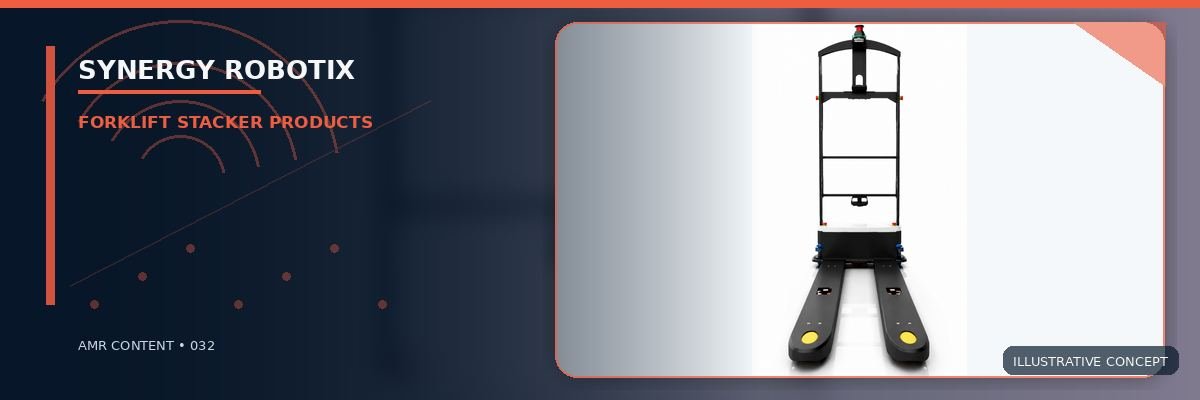
Overview
Pallet automation uses forklift-type AGVs, heavy AMRs or autonomous stackers to transfer pallets between docks, staging areas, production and racking, including put-away at upper rack levels with automatic confirmation of placement. Tow-cart automation uses tugger AMRs or tow-tractor AGVs to pull carts or trailer trains along scheduled routes for line feeding and replenishment. Fleet rules manage shared routes, crossings, waiting positions and priority, while status reporting, alarms and event logs give visibility of each move. Emergency stop and controlled restart procedures form part of the safety design.
Planning pallet and cart automation
Usable capacity depends on the mast, attachment, load centre, pallet or carrier type, floor, rack and route, so nominal vehicle classes do not replace an approved load chart for the site. Survey the loads, rack tolerances, aisle widths, transfer points, traffic and charging locations, and define the interfaces to WMS, WCS, ERP or MES.
Range overview
- Types and variants
- Autonomous Forklift Stacker
- Forklift AGV
- Heavy Pallet AMR
- Tugger AMR
- Tow Tractor AGV
- Features
- Placement Verification at Rack Level
- Configured Traffic Rules and Waiting Positions
- Fleet-Managed Shared Routes and Priority
- Charging Point Planning
- Status Reporting, Alarms and Event Logs
- Emergency Stop and Controlled Restart
Exact specifications depend on the variant, material and size. Confirm ratings and certification against the datasheet or with our engineers before ordering.
Applications
- High-Bay Pallet Put-Away and Retrieval
- Dock-to-Storage Transfer
- Line Feeding
- Replenishment Routes
- Cart and Trailer-Train Towing
Industries
- Warehousing
- Manufacturing
- Automotive
- FMCG
- Logistics
Information that speeds up a quotation
Share what you know. Anything you are unsure of can be marked “not known” — our engineers will help confirm it.
- Payload
- Route
- Floor
- Obstacles
- Lift
- Traffic
- WMS
- Charging
- Safety
- Uptime
Need a datasheet?
Add this family to your enquiry list and mention the variant — we will send the relevant technical documents.
Robot and intralogistics concepts
Related and alternative families
Autonomous mobile robots (AMR)
Autonomous mobile robots (AMRs) that move materials around factories, warehouses and hospitals without fixed tracks or floor tape, navigating by laser mapping…
Automated guided vehicles (AGV)
Automated guided vehicles (AGVs) that carry, tow or lift loads along predefined routes in factories and warehouses, guided by magnetic tape, laser,…
Mobile-robot material transport
Mobile-robot systems for routine internal transport of parts, totes, carts, medicines and supplies between workstations, stores, wards and docks, planned route by…
Warehouse intralogistics integration
Integration of mobile robots and AGVs with warehouse and production systems, defining how tasks are created, handed over and confirmed between robots,…
AMR fleet-management integration
Fleet management for AMRs and AGVs, assigning tasks, managing routes, charging and shared resources, and exchanging status with warehouse, production and equipment…
Industrial robot deployment and commissioning
Deployment and commissioning of industrial robots, AMRs and AGVs, from site survey and design through installation, interface integration, safety validation, acceptance testing,…
Related solutions and guides
Frequently asked questions
What do you need to assess pallet automation?
Provide pallet types and sizes, load weights and load centres, rack heights and beam levels, aisle widths, floor condition, the number of moves per hour and the pick-up and drop-off points. Details of the WMS or ERP that will issue tasks, and photographs of racks and docks, help define the vehicle and route.
Why is a site-specific load chart needed?
An autonomous forklift's safe capacity at a given lift height depends on its mast, attachment, load centre, the carrier used, floor flatness and rack tolerances. A nominal tonnage or lift class is a starting point only. The approved load chart for the configured vehicle and site governs what can be handled.
Ready to specify pallet and tow-cart movement automation?
Send the details you have — quantities, sizes, drawings or a part number. Unknowns are fine.