
Fluid, piping & valves
Metal expansion bellows
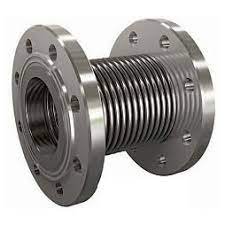
Metal expansion bellows and expansion joints that absorb thermal movement, vibration and misalignment in pipework, in axial, lateral, hinged, gimbal and pressure-balanced designs, made in stainless steel to the required size and connection.
Overview
An expansion bellows is a flexible, convoluted metal element fitted into a pipeline so that the line can grow, shrink or move without overloading anchors, nozzles or equipment. The design type is chosen by the movement it must handle: axial joints take compression and extension along the pipe axis; lateral, hinged and gimbal joints take offset and angular movement; pressure-balanced designs counter the pressure thrust that a simple bellows would otherwise impose.
The range also covers externally pressurised, two-ply testable, rectangular and slip-type joints, and flexible stainless bellows from 1/2 in to 18 in, made to the size and end connection required.
Selecting an expansion joint
Begin with the movements to be absorbed (axial, lateral, angular), the design pressure and temperature, the media and the pipe size. These determine bellows type, number of plies and material. Then confirm end connections, any liners or covers, and the anchor and guide arrangement in the line.
Range overview
- Types and variants
- Axial Expansion Joints
- Lateral Expansion Joints
- Hinged Expansion Joints
- Gimbal Expansion Joints
- In-Line Pressure-Balanced Joints
- Elbow Pressure-Balanced Joints
- Externally Pressurised Joints
- Two-Ply Testable Bellows
- Rectangular Expansion Joints
- Slip-Type Expansion Joints
- Materials and grades
- Stainless Steel
- Size range
- 1/2 in to 18 in
- Flexible Bellows Lengths 1 m to 6 m
- Connections and interfaces
- As Per Requirement
- Features
- Made to Required Size and Connection
- Designs for Axial, Lateral and Angular Movement
Exact specifications depend on the variant, material and size. Confirm ratings and certification against the datasheet or with our engineers before ordering.
Applications
- Thermal Expansion in Pipelines
- Vibration Isolation
- Misalignment Correction
- Water and Chemical Lines
- Gas Lines
- Hydraulic Lines
Industries
- Chemical
- Power generation
- Oil and gas
Information that speeds up a quotation
Share what you know. Anything you are unsure of can be marked “not known” — our engineers will help confirm it.
- Nominal size
- Pressure class
- Material
- End connection
- Standard
- Temperature
- Media
- Drawing
- Certification
Need a datasheet?
Add this family to your enquiry list and mention the variant — we will send the relevant technical documents.
Piping and hydraulic connections
Related and alternative families
Pipe fittings and flanges
Pipe fittings and flanges for process and utility piping, from butt-weld and forged fittings to slip-on, weld-neck, blind and threaded flanges, in…
Stainless steel butt-weld fittings
Stainless steel butt-weld pipe fittings, including bends, elbows, crosses and stub ends, for changing direction, branching or reducing welded process piping in…
Forged threaded and socket-weld fittings
Forged socket-weld and threaded pipe fittings for small-bore process lines, including elbows, couplings, half couplings, connectors, outlets and nipples in stainless, duplex…
Stainless steel seamless pipes and tubes
Stainless steel seamless and welded pipes and tubes for hydraulic, instrumentation and process lines, in 304 and 316 grades, with pickled, polished…
Hydraulic SAE flanges
Hydraulic SAE four-bolt flanges in Code 61 and Code 62 patterns, with one-piece flanges and split flange clamps for connecting hose ends,…
Hydraulic tube clamps
Hydraulic tube clamps in light, heavy and double-hole series for supporting and securing hydraulic tube and pipe runs, with polypropylene or polyamide…
Frequently asked questions
What information is needed to design an expansion joint?
Provide pipe size, design and operating pressure and temperature, the media, the axial, lateral and angular movements to be absorbed, the available installation length, the end connections, and the number of cycles expected if known. A piping layout showing anchors and guides helps confirm the joint type.
Why are pressure-balanced joints used?
A simple bellows under internal pressure pushes outwards on the pipe anchors with a force related to pressure and bellows area. Pressure-balanced designs include an additional bellows arrangement that cancels this thrust, which is useful where anchors cannot take the load, such as near pumps or turbines.
Ready to specify metal expansion bellows?
Send the details you have — quantities, sizes, drawings or a part number. Unknowns are fine.