
Fluid, piping & valves
Hydraulic SAE flanges
Hydraulic SAE four-bolt flanges in Code 61 and Code 62 patterns, with one-piece flanges and split flange clamps for connecting hose ends, tube and pipe to pumps, valves and manifolds with an O-ring face seal.
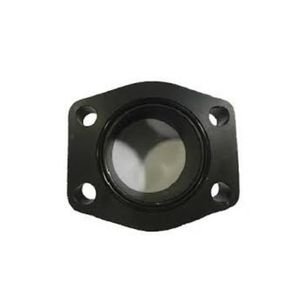
Overview
SAE four-bolt flanges are used on larger hydraulic lines where threaded connections become difficult to assemble and tighten. The flange, or a pair of split flange halves, clamps a flanged hose or tube head against the port face, and an O-ring in the face makes the seal. Code 61 and Code 62 patterns differ in dimensions and pressure duty. The range covers one-piece flanges, solid and split flange clamps, one-piece and two-piece flange kits, flange connections with block-and-bleed valves, and flanged-end ball valves. Materials include carbon steel to ASTM A105 and stainless steel to ASTM A182, and custom designs can be discussed.
Selecting SAE flanges
Identify the code (61 or 62) and the flange size from the port, then choose one-piece or split construction depending on whether the hose or tube can be threaded through the flange. Confirm the connection on the other side, such as a weld, thread or hose end, and the material for the environment.
Range overview
- Types and variants
- Code 61 SAE Flanges
- Code 62 SAE Flanges
- One-Piece Flanges
- Split Flange Clamps
- One-Piece and Two-Piece Flange Kits
- Block-and-Bleed Flange Connections
- Flanged SAE Ball Valves
- Materials and grades
- Carbon Steel (ASTM A105)
- Stainless Steel (ASTM A182)
- Size range
- 1/2 in to 5 in
- Flanged Ball Valves: 1/4 in to 3 in
- Pressure / temperature
- 3000 psi and 6000 psi (as listed)
- Connections and interfaces
- SAE Four-Bolt Flange
- O-Ring Face Seal
- Flanged End
- Standards referenced
- SAE J518
- ISO 6162
- ASTM A105
- ASTM A182
- Features
- One-Piece and Split Designs
- Custom Designs on Request
- Tested Before Delivery
Exact specifications depend on the variant, material and size. Confirm ratings and certification against the datasheet or with our engineers before ordering.
Applications
- Hydraulic Pump and Valve Connections
- High-Pressure Hydraulic Lines
- Shock and Vibration Service
Industries
- Hydraulics
- Construction
- Mining
Information that speeds up a quotation
Share what you know. Anything you are unsure of can be marked “not known” — our engineers will help confirm it.
- Nominal size
- Pressure class
- Material
- End connection
- Standard
- Temperature
- Media
- Drawing
- Certification
Need a datasheet?
Add this family to your enquiry list and mention the variant — we will send the relevant technical documents.
Piping and hydraulic connections
Related and alternative families
Pipe fittings and flanges
Pipe fittings and flanges for process and utility piping, from butt-weld and forged fittings to slip-on, weld-neck, blind and threaded flanges, in…
Stainless steel butt-weld fittings
Stainless steel butt-weld pipe fittings, including bends, elbows, crosses and stub ends, for changing direction, branching or reducing welded process piping in…
Forged threaded and socket-weld fittings
Forged socket-weld and threaded pipe fittings for small-bore process lines, including elbows, couplings, half couplings, connectors, outlets and nipples in stainless, duplex…
Stainless steel seamless pipes and tubes
Stainless steel seamless and welded pipes and tubes for hydraulic, instrumentation and process lines, in 304 and 316 grades, with pickled, polished…
Hydraulic tube clamps
Hydraulic tube clamps in light, heavy and double-hole series for supporting and securing hydraulic tube and pipe runs, with polypropylene or polyamide…
Quick-release couplings
Quick-release couplings for hydraulic and pneumatic lines, connecting and disconnecting hoses by hand with spring-loaded ball latching and valves that close automatically…
Related solutions and guides
Frequently asked questions
What is the difference between Code 61 and Code 62 flanges?
Both follow the four-bolt SAE flange pattern, but Code 62 has larger bolt spacing and heavier sections for higher-pressure duty. The two are not interchangeable on the same port. Check the port marking or measure the bolt spacing to identify which code you need.
When should I choose a split flange instead of a one-piece flange?
Split flanges are fitted around a hose or tube head after the line is in place, which is useful when the far end is already assembled or space is tight. One-piece flanges must be slid on before the head is fitted. Both seal by clamping the head against the O-ring face.
Ready to specify hydraulic sae flanges?
Send the details you have — quantities, sizes, drawings or a part number. Unknowns are fine.