
Fluid, piping & valves
Gauge root valves
Gauge root valves for the first isolation point between a process tapping and its impulse line, gauge or transmitter, in bar-stock construction with NPT ends as standard and optional vent plug or bleed valve.
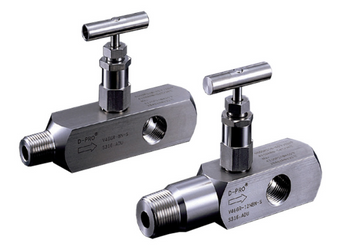
Overview
The root valve sits at the process connection and is the primary isolation for everything downstream on an instrument line. Gauge root valves are compact, bar-stock valves that connect impulse lines and transmitters to the process and allow the line to be shut off for maintenance. The source range has standard NPT ends, with BSP, BSPT and ANPT threads on request. PTFE packing is standard and graphite packing is offered for higher temperatures. Soft-seat versions and versions with a vent plug or bleed valve are available. Components are ultrasonically cleaned before assembly and carry heat code traceability.
Selecting a gauge root valve
Confirm the process connection thread and size, the outlet connection to the impulse line, the maximum pressure and temperature, and the media. Choose packing for the temperature and decide whether a bleed or vent is wanted at the valve. For sour service, ask about NACE MR0175 materials.
Range overview
- Types and variants
- Gauge Root Valves
- Soft-Seat Gauge Root Valves
- Gauge Root Valves With Vent Plug
- Gauge Root Valves With Bleed Valve
- Materials and grades
- Bar Stock (Grade on Request)
- PTFE Packing
- Graphite Packing
- Pressure / temperature
- 6000 psi standard working pressure with PTFE packing
- Pneumatic seat test: 1000 psi nitrogen
- Hydrostatic seat test: 1.1 x working pressure
- Hydrostatic shell test: 1.5 x working pressure
- Connections and interfaces
- NPT (Standard)
- BSP
- BSPT
- ANPT
- Standards referenced
- NACE MR0175 (materials on request)
- EN 10204 3.1 Inspection Certificate
- Features
- Bar-Stock Construction
- Soft-Seat Option
- Vent Plug or Bleed Valve Option
- Ultrasonically Cleaned Components
- Heat Code Traceability
Exact specifications depend on the variant, material and size. Confirm ratings and certification against the datasheet or with our engineers before ordering.
Applications
- Primary Isolation at Process Tappings
- Impulse Line and Transmitter Connections
- Pressure Gauge Isolation
Industries
- Oil and gas
- Chemical
- Petrochemical
- Power generation
- Shipbuilding
Information that speeds up a quotation
Share what you know. Anything you are unsure of can be marked “not known” — our engineers will help confirm it.
- Valve type
- Port
- Flow direction
- Pressure
- Temperature
- Cv
- Material
- End connection
- Actuation
- Standard
Need a datasheet?
Add this family to your enquiry list and mention the variant — we will send the relevant technical documents.
Valves and manifolds
Related and alternative families
Industrial ball valves
Quarter-turn ball valves for shut-off duty on oil, gas, water, air and fuel lines, from compact instrument valves to high-pressure models, in…
Needle valves
Instrument needle valves for fine flow regulation and isolation on gauge, transmitter, sampling and process lines, machined from bar stock or forgings…
Check valves
Check (non-return) valves that let flow pass in one direction and close automatically against reverse flow, from instrument-size poppet and piston check…
Block valves
Block valves for isolating process connections to instruments and sample points, including single and double block-and-bleed valves, monoflange valves and block-and-bleed gauge…
Bleed valves
Instrument bleed valves for venting trapped signal-line pressure to atmosphere before an instrument is removed or during calibration, used on multi-valve manifolds,…
Double block-and-bleed assemblies
Double block-and-bleed assemblies and multi-valve manifolds that give two-barrier isolation with a vent between, for safe maintenance and calibration of pressure gauges,…
Related solutions and guides
Frequently asked questions
What does a gauge root valve do?
It is the first valve on an instrument line, mounted at the process tapping. Closing it isolates the whole impulse line and instrument from the process, so tubing, manifolds and gauges downstream can be maintained. A bleed or vent option lets the trapped pressure be released at the valve.
What should I include in a gauge root valve enquiry?
Give the inlet and outlet thread types and sizes, body material, packing, seat type, whether a vent plug or bleed valve is required, maximum pressure and temperature, media and quantity. You can request EN 10204 3.1 certificates, 3.2 on request, and NACE MR0175 materials.
Ready to specify gauge root valves?
Send the details you have — quantities, sizes, drawings or a part number. Unknowns are fine.